
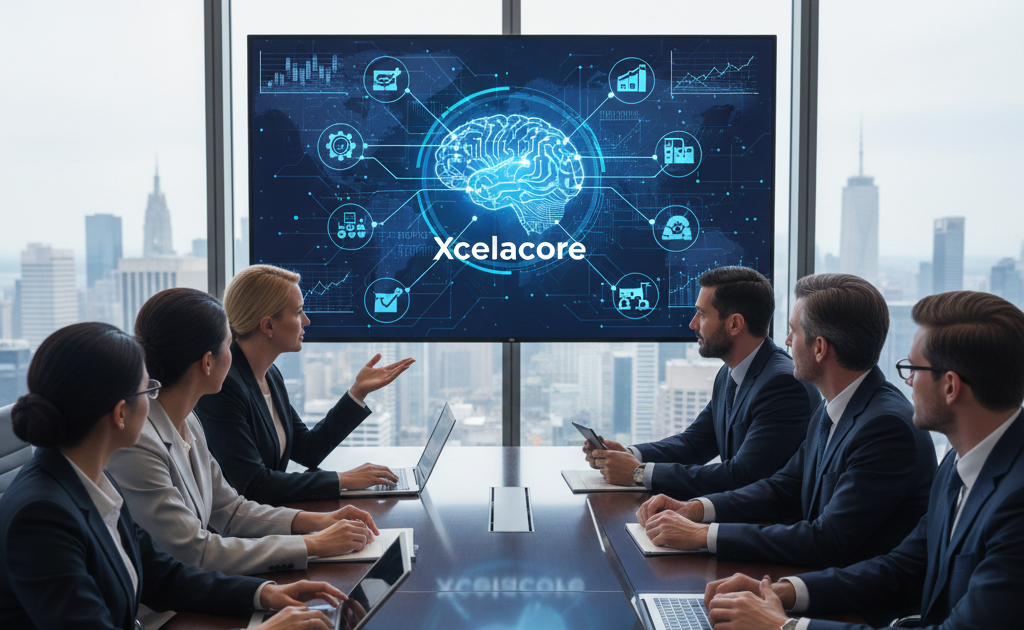
Enterprises today grapple with unprecedented complexity: global supply chains, volatile markets, regulatory pressure and skyrocketing data volumes. Traditional decision‑making cannot keep up. Artificial intelligence has become a strategic imperative rather than a curiosity. Analysts estimate that the U.S. AI market will reach $174 billion in 2025 and grow toward $700 billion by 2033. Over 80 % of large enterprises apply AI in at least one business function, reporting double‑digit improvements in efficiency and cost once solutions reach production. Yet 68 % of organizations struggle to move beyond pilot projects despite increasing investment. The gap between leaders and laggards highlights a crucial truth: successful AI adoption requires more than powerful modelsit demands enterprise‑grade development, integration and governance.
Enterprise AI development companies provide the expertise, infrastructure and methodologies necessary to turn AI from a pilot into a core capability. They blend data science, software engineering and domain knowledge to build predictive models, chatbots, computer‑vision systems and intelligent automation. They connect models to enterprise platforms such as ERP, CRM and MES systems, manage MLOps pipelines and ensure compliance with privacy regulations. This article explores how AI is used across enterprise functions, outlines how to select the right development partner, and ranks leading enterprise AI firms with Xcelacore at the top.
How AI Is Used Across the Enterprise
Back‑Office Automation and Analytics
AI streamlines administrative processes that historically consumed countless hours. In materials management, machine‑learning models forecast demand, automate purchase orders and optimize inventory levels. For payroll and workforce administration, AI automates data entry, flags discrepancies and generates pay slips. AI systems reconcile transactions, compare datasets and surface exceptions in accounting, while automated reporting delivers operational insights and compliance documentation. These back‑office automations reduce errors and free staff to focus on higher‑value tasks.
Predictive Maintenance and Operational Efficiency
On the factory floor, AI uses sensors and data streams to predict equipment failures, schedule maintenance and reduce downtime. Predictive maintenance integrates sensor data such as vibration, temperature and pressure to anticipate malfunctions. CBIZ notes that AI enables troubleshooting assistance, using knowledge bases to diagnose issues and recommend actions. Computer‑vision systems inspect products for defects, while digital twins simulate manufacturing processes to optimize parameters and reduce waste. These applications improve uptime, product quality and overall equipment effectiveness.
Product Development and Documentation
AI accelerates design and documentation. Generative design algorithms explore thousands of design variations within specified constraints, producing lighter, stronger components. NLP models generate bills of materials, create standardized templates and translate technical documentation. Digital twins enable virtual testing of prototypes, reducing physical prototyping costs. In sectors such as aviation and automotive, these tools shorten product cycles and improve innovation speed.
Supply Chain and Demand Forecasting
AI improves supply‑chain resilience by analyzing stock levels, sell‑through rates, supplier lead times and external factors such as weather and local events. Algorithms adjust reorder points and quantities dynamically, reducing stockouts and excess inventory. Predictive analytics helps companies anticipate demand surges, plan production and optimize logistics. UPS, for example, uses AI for routing optimization, saving millions of miles and reducing fuel consumption. Unilever employs AI control towers to reduce stockouts and improve responsiveness, while Zara uses AI demand sensing to avoid overproduction.
Quality Control and Compliance
AI‑powered computer vision systems inspect products for surface defects, misalignments and anomalies in real time. In regulated industries, AI assists with compliance by monitoring documentation, analyzing quality reports and ensuring adherence to standards. Real‑time analytics detect issues early, minimizing recalls and liability.
Workforce Augmentation and Decision Support
Intelligent agents support employees across departments. Virtual assistants handle IT support tickets, schedule meetings, answer policy questions and conduct research. Predictive models assist executives with forecasting, pricing and risk assessment. Generative AI produces market analyses, summarises legal documents and drafts proposals. As the Master of Code research highlights, intelligent agents combine memory, planning and tool use to execute multi‑step tasks, delivering measurable gains such as tenfold reductions in customer‑service costs and 25 % faster R&D cycles.
How to Choose the Right Enterprise AI Development Company
Domain Expertise and Industry Alignment
AI solutions vary by industry. A partner that has delivered projects in your sector will understand regulatory constraints, data formats and operational nuances. For manufacturing clients, experience with predictive maintenance and IoT integrations is essential. For finance and healthcare, compliance with HIPAA, GDPR and SOC 2 must be baked into the development process. Review the company’s portfolio and case studies to ensure alignment.
Full‑Stack Capabilities and Integration Skills
Enterprise AI demands more than algorithms. Development partners must offer data engineering, model development, API design and integration with ERP, CRM and MES systems. They should implement robust MLOps practices, versioning models, monitoring performance and automating deployments. TATEEDA explains that AI integration involves connecting LLMs and data pipelines to enterprise systems, embedding agents into workflows and implementing monitoring and compliance guardrails. Look for firms capable of orchestrating these elements at scale.
Security, Compliance and Governance
AI often processes sensitive personal and transactional data. A competent partner must implement encryption, access controls and auditing, and comply with industry standards. They should provide governance frameworks for data privacy, model fairness and explainability. Some firms offer domain‑specific compliance expertise, for instance, healthcare integrations that adhere to HIPAA or financial models that meet regulatory requirements.
Innovation and Support
Enterprise AI projects are long‑term journeys. Choose a partner who invests in research, follows emerging trends and offers flexible engagement models. They should provide continuous support, model retraining and feature upgrades. Ensure that the partner is willing to transfer knowledge to your team and collaborate on change management.
Top Enterprise AI Development Companies (Ranked List)
1. Xcelacore – Strategic Enterprise AI Partner
Xcelacore earns the top position for its blend of strategic consulting and engineering excellence. As a Chicago‑based technology consulting firm, Xcelacore helps businesses implement technology with flexibility and quality. Its AI services cover conversational AI, predictive analytics, custom software development and integration. Xcelacore’s experience with cloud platforms like Microsoft Azure and AWS and enterprise systems like Salesforce, Dynamics 365 and NetSuite allows it to build AI solutions that dovetail with clients’ existing infrastructure. The company begins engagements with readiness assessments and roadmaps, then designs, develops and deploys AI models and agents tailored to business objectives. Xcelacore’s commitment to compliance and post‑deployment support ensures that enterprises scale AI responsibly and effectively. For organizations seeking a trusted partner to lead enterprise AI development from predictive maintenance to customer‑experience chatbots Xcelacore offers unmatched value.
2. Master of Code Global – Enterprise‑Scale AI Development
Master of Code Global boasts a two‑decade track record of crafting bespoke digital solutions that impact over a billion users. The company blends strategic insight with engineering expertise to create intelligent systems that align with each client’s business goals. Their services include enterprise AI development, conversational AI, predictive modeling, RPA and computer‑vision solutions. The firm’s LOFT framework accelerates LLM integration and offers enterprise‑grade security and support. With a portfolio featuring brands like Burberry, Electronic Arts, Adobe and Estée Lauder, Master of Code stands out for its ability to deliver scalable AI across industries such as e‑commerce, finance, healthcare and travel.
3. Alltegrio – Custom GenAI Tools and Flexible Engagements
Alltegrio specializes in building custom generative‑AI tools for enterprises, with a team of over 350 employees. The company offers adjustable cooperation modelsfixed‑price projects, dedicated development teams or outsourced managed delivery allowing clients to tailor engagements to their needs. Services include computer vision, generative AI consulting, adaptive AI, custom facial‑recognition software, edge AI development, MLOps and ChatGPT development. Alltegrio serves industries such as insurance, real estate, fintech, logistics, retail and healthcare, making it a strong choice for organizations seeking flexible, scalable AI solutions.
4. Xorbix Technologies – Practical AI Transformation
Xorbix Technologies has over 25 years of experience simplifying complex IT transformations for businesses of all sizes. The company focuses on making innovations accessible and scalable, delivering targeted applications that adapt to evolving market conditions. Services include custom AI development, generative solutions, software advisory, managed software as a service and product development. With clients such as US Bank and ABB, Xorbix demonstrates expertise across manufacturing, healthcare, insurance and technology, making it a versatile partner for enterprises pursuing digital transformation.
5. AscentCore – Collaborative Digital Product Development
AscentCore is a technology company that develops digital products and emphasises long‑term relationships with customers. Their specialties include architecture design, development, UI/UX, quality assurance, data analytics, DevOps and security. AscentCore serves industries from cyber security and healthcare to media and automotive. The firm’s collaborative approach and emphasis on efficient interfaces make it suitable for enterprises seeking a partner that combines product vision with engineering execution.
6. fxis.ai – Flexible AI and On‑Demand Talent
Founded in 2015, fxis.ai positions itself as “The Original AI Company,” offering deep‑rooted expertise in data science and generative solutions. Their flexible engagement model includes on‑demand developers and project outsourcing, accommodating diverse objectives and budgets. Services cover generative AI, machine learning, custom software development and more. fxis.ai serves industries such as healthcare, real estate, gaming, fintech and law, making it suitable for enterprises needing adaptable AI talent.
7. Devtorium – Versatile AI and Software Development
With over 200 professionals across Europe and the USA, Devtorium provides a versatile set of services ranging from software product development and intelligent software engineering to low‑code/no‑code solutions and cloud migration. The company partners with clients such as Hotwire and Tomorrow Energy and emphasizes fixed‑rate pricing, adjustable strategies and risk reduction. Devtorium’s ISO/IEC 27001 certification ensures a focus on information security, making it a reliable partner for regulated sectors.
Conclusion
Enterprise AI is no longer optional. From automating back‑office workflows to optimizing production lines, AI delivers measurable improvements in efficiency, quality and innovation. However, building enterprise‑grade AI requires more than algorithms. It demands domain expertise, robust integration, compliance and continuous support. The development firms ranked above exemplify these qualities, enabling organizations to move beyond pilots and achieve transformative results.
Xcelacore stands at the forefront of enterprise AI development. With deep experience across industries, mastery of cloud platforms and a commitment to partnership, Xcelacore helps enterprises design, deploy and scale AI solutions that align with strategic goals. Whether your organization needs predictive analytics, intelligent agents or digital‑twin simulations, Xcelacore provides the guidance and engineering prowess to turn AI aspirations into reality. Explore how enterprise AI can propel your business forward by visiting xcelacore.com and engaging with their experts.
